Views: 0 Author: Site Editor Publish Time: 2025-12-24 Origin: Site
Did you know that the distance an electric wheelchair can travel varies widely? If you're relying on one, understanding the range can be a game-changer. But how far can a motorized wheelchair really go on a full charge? This article will explore the key factors that affect distance, from battery size to terrain. You’ll also learn how to maximize your wheelchair's range and make an informed decision based on your needs.
The range of an electric wheelchair refers to the maximum distance it can travel on a fully charged battery. The distance varies depending on multiple factors, such as the type of wheelchair, battery capacity, and usage conditions. On average, electric wheelchairs can travel between 10 to 25 miles on a full charge, but this range can change depending on the model and user circumstances.
Manufacturers measure the range of electric wheelchairs under ideal conditions: a full battery, flat terrain, and an average user weight. However, real-world conditions often affect the range. Factors such as uneven terrain, weather, and additional power functions can reduce the actual distance covered.
Battery capacity plays a significant role in determining how far your electric wheelchair can go on a full charge. Wheelchairs equipped with larger batteries can typically travel farther. For instance, a wheelchair with a 24V battery might offer a range of 15–20 miles, whereas one with a 50V battery could exceed 25 miles. Lithium-ion batteries, although more expensive, offer greater efficiency and longer lifespans compared to traditional lead-acid batteries.
The weight of the user significantly affects the range. Heavier users require more power to move, reducing the overall distance the wheelchair can cover. Additionally, any extra load, such as bags or medical equipment, will decrease the range as more power is needed to carry the additional weight.
Terrain is another important factor. Smooth, flat surfaces are ideal for maximizing distance, as the wheelchair encounters minimal resistance. However, rough terrains, such as gravel, grass, or hills, require more energy to navigate, leading to a significant reduction in the range. Electric wheelchairs designed for all-terrain use, such as those with larger wheels and robust motors, are more capable of handling these challenges but still experience reduced efficiency on uneven ground.
Speed is a key factor in determining range. Higher speeds drain the battery faster, while maintaining a steady pace conserves power. Additionally, frequent starts and stops, as well as rapid accelerations, consume more battery power. A consistent, moderate speed can help users extend the distance they can travel on a single charge.
Cold weather can negatively impact the performance of an electric wheelchair's battery. In winter conditions, battery efficiency typically drops by 15-30%, leading to a shorter range. If the wheelchair is used in freezing conditions or stored in cold environments, it’s advisable to keep the battery warm or use it sparingly.
Factor | Impact on Range |
Battery Capacity | Larger batteries provide longer range |
User Weight and Load | Heavier users decrease range |
Terrain | Rough terrains reduce range |
Speed and Driving Style | Higher speeds use more battery power |
Temperature Conditions | Cold weather reduces battery efficiency |
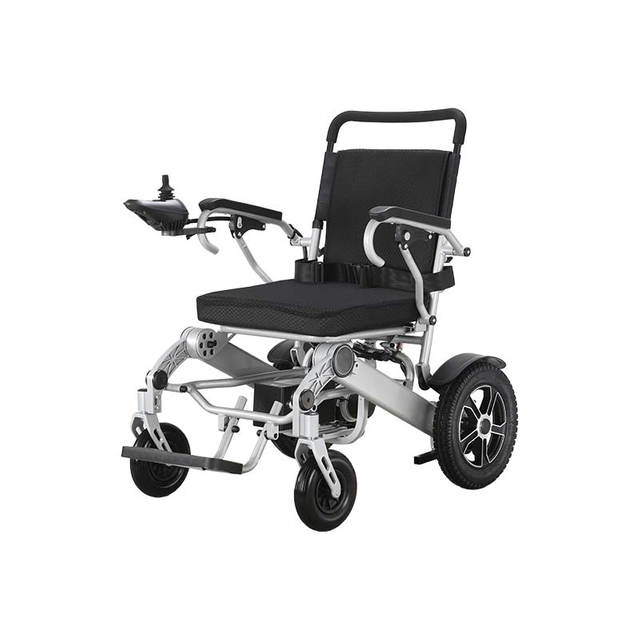
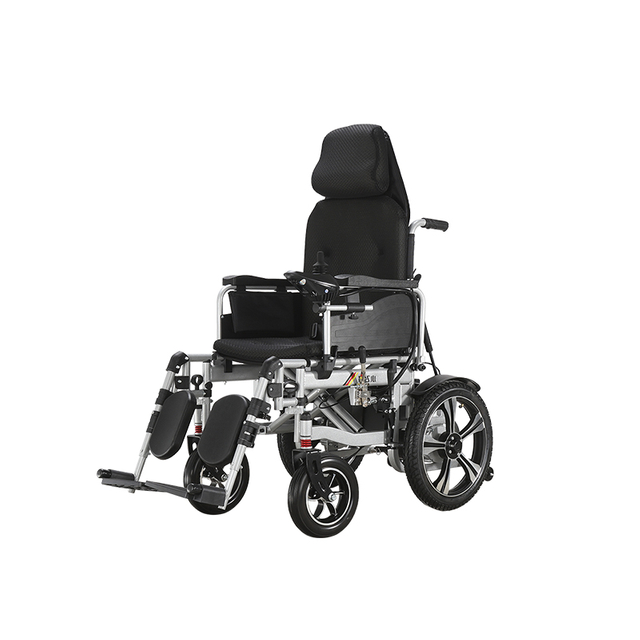
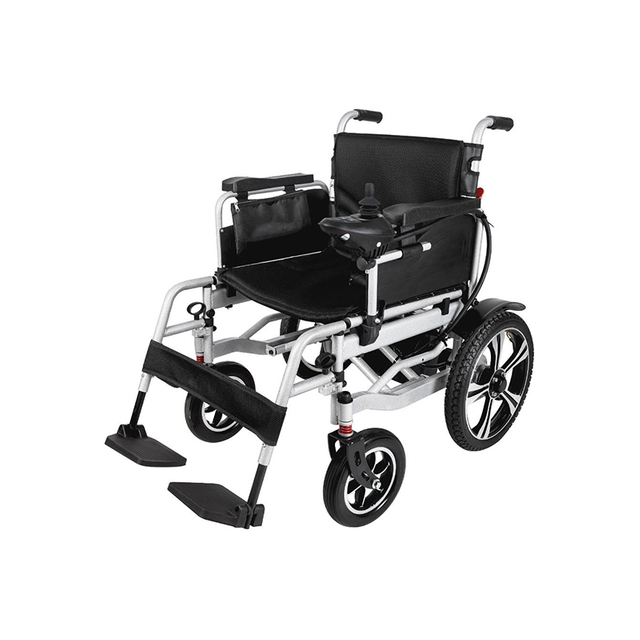
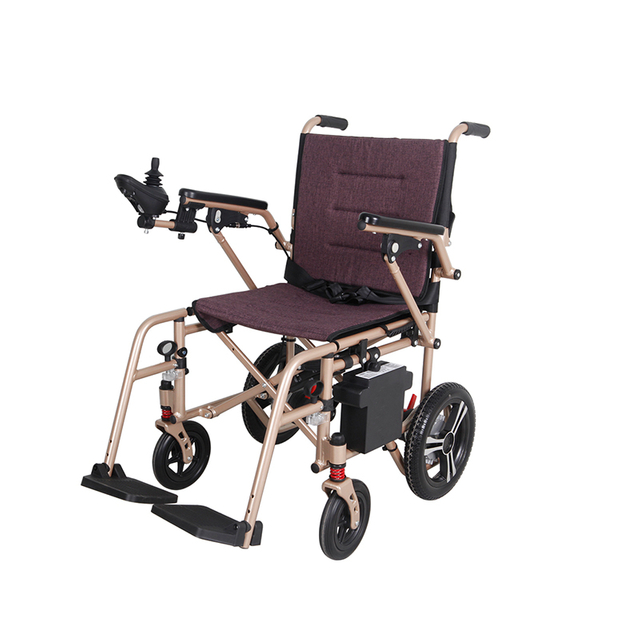
Standard models typically offer a range of 10–15 miles per charge on flat, smooth surfaces. These wheelchairs are ideal for indoor use or short trips around the neighborhood.
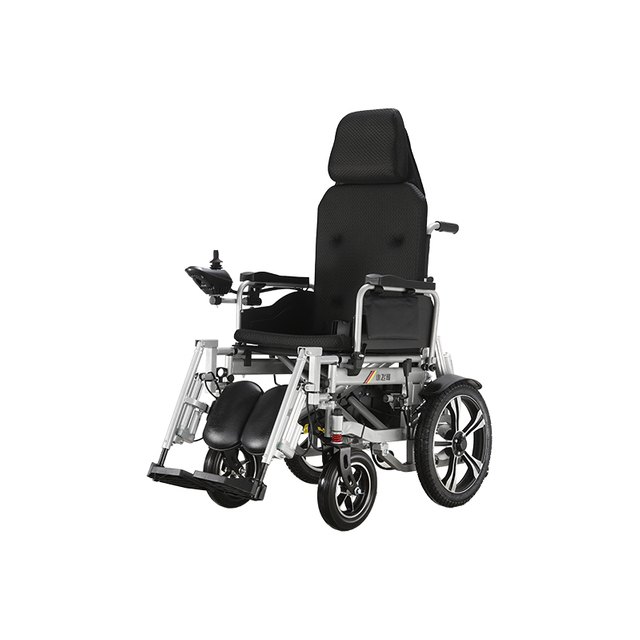
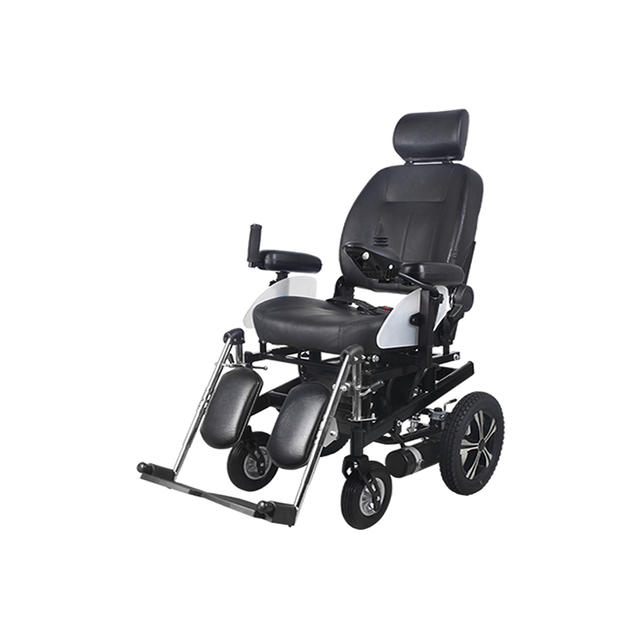
For users who require a wheelchair capable of handling more demanding conditions, heavy-duty or all-terrain models are ideal. These models usually offer a range of 15–25 miles, making them perfect for outdoor use on uneven terrain or for extended daily activities.
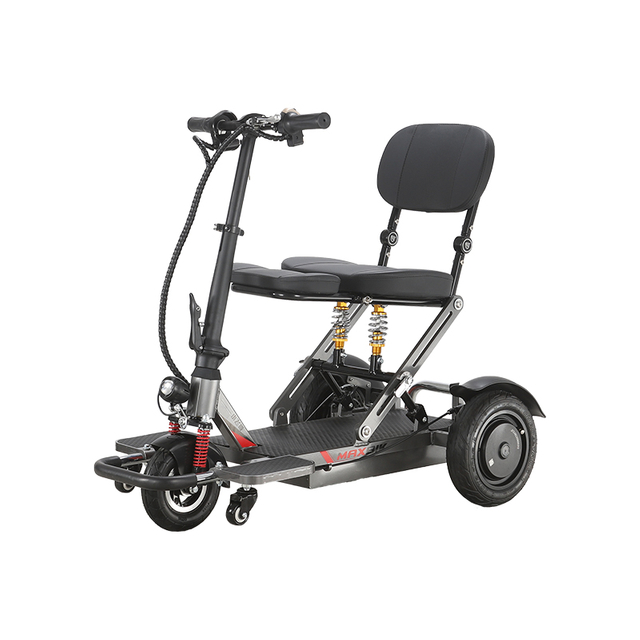
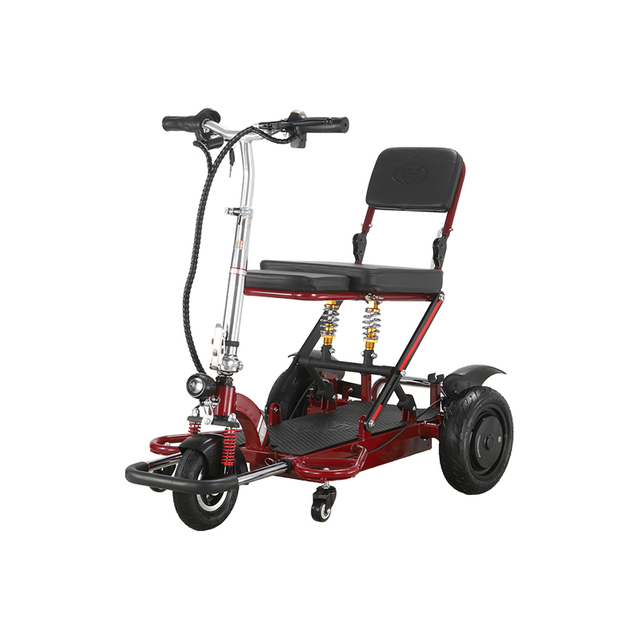
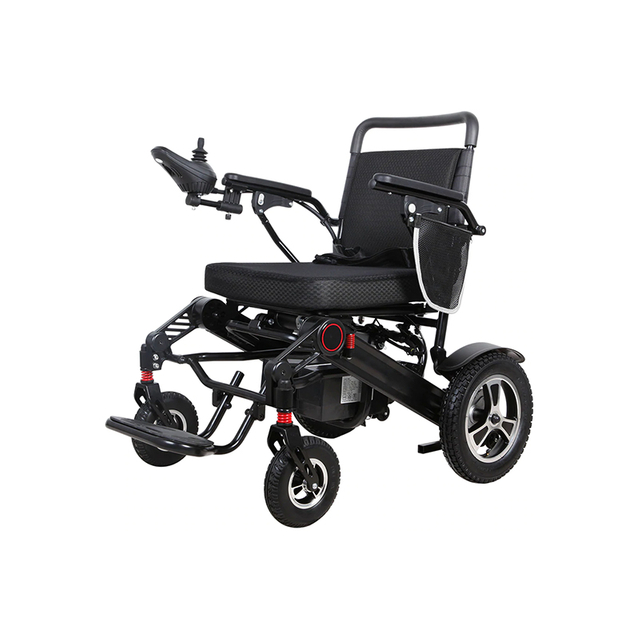
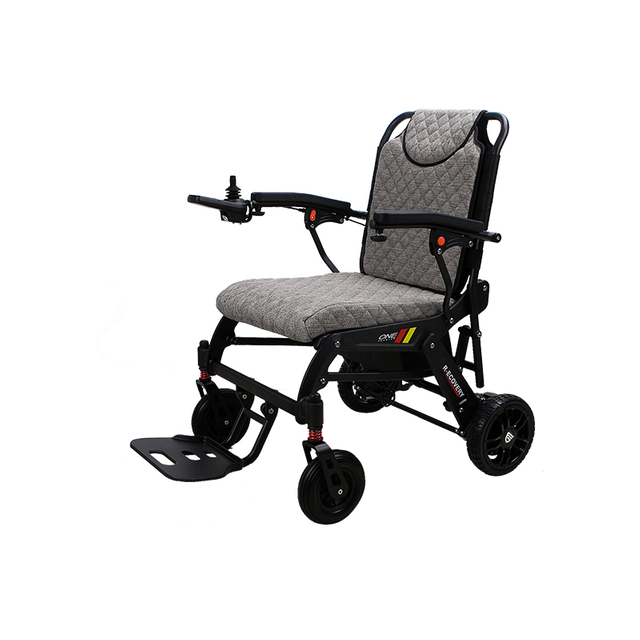
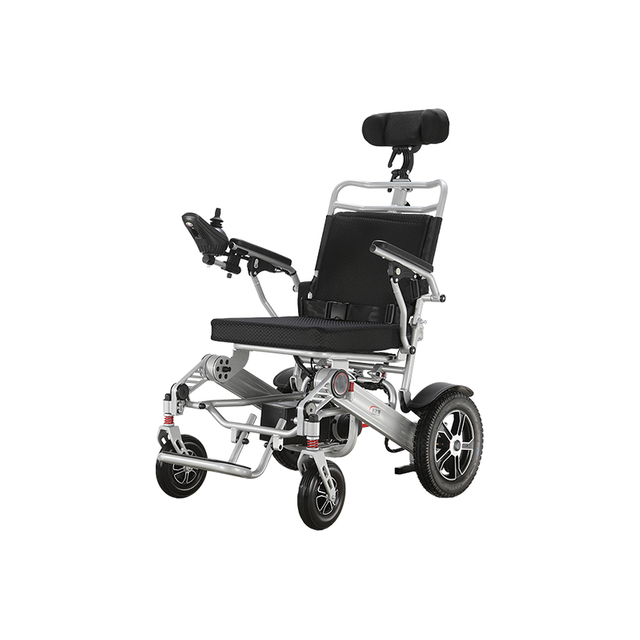
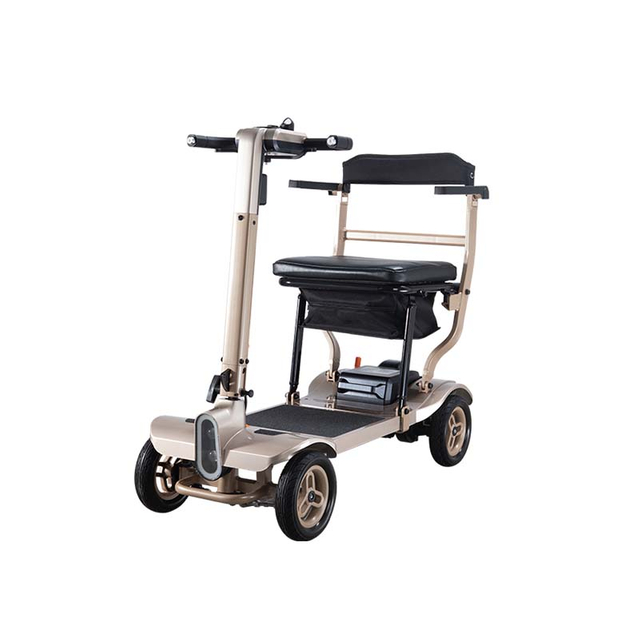
Portable and lightweight electric wheelchairs are designed for easy transport and storage, making them ideal for travel. These models usually offer a range of 7–12 miles per charge, prioritizing portability over long-distance capability.
Model Type | Average Range (Miles) | Battery Type |
Standard Electric Wheelchair | 10-15 miles | Lead-Acid / Lithium-ion |
Heavy-Duty or All-Terrain Model | 15-30 miles | Lithium-ion |
Portable / Lightweight Model | 7-12 miles | Lead-Acid / Lithium-ion |
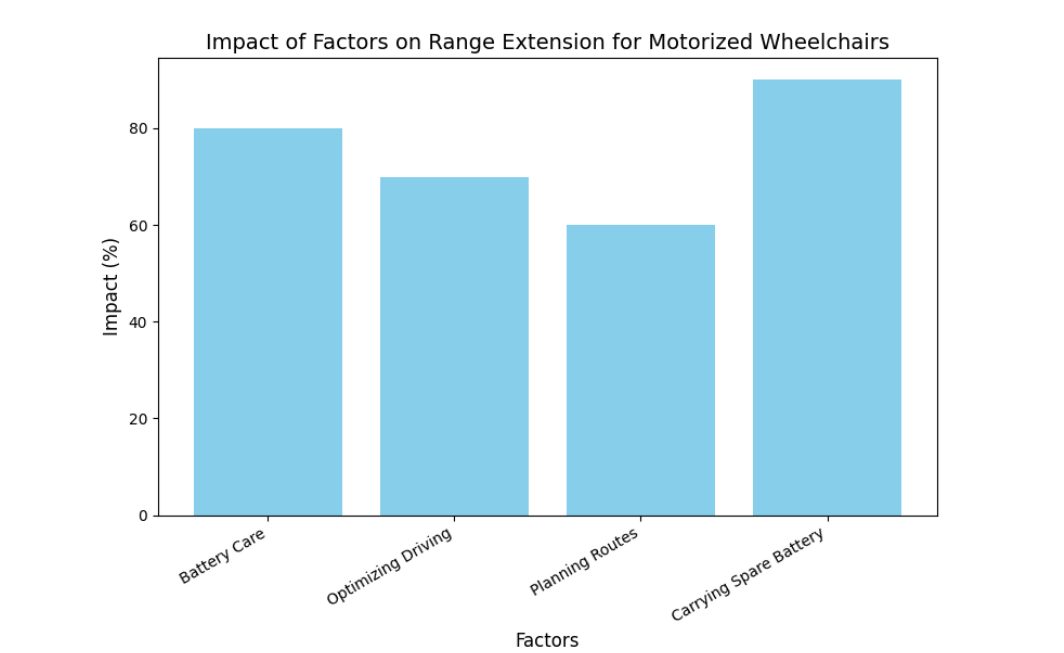
Proper battery maintenance is essential for maximizing the lifespan and performance of your wheelchair’s battery. Regularly charge your battery fully and avoid letting it discharge completely. If you store your wheelchair for long periods, keep it in a temperature-controlled environment to preserve the battery's efficiency. Additionally, always use the charger provided by the manufacturer to avoid potential damage and ensure the battery functions optimally.
To extend your wheelchair's range, it's important to maintain smooth and consistent driving habits. Avoid rapid acceleration, abrupt stops, and frequent uphill climbs. These actions can drain the battery more quickly. Instead, try to keep a steady pace on flat surfaces, which helps maintain battery life and allows you to travel further on a single charge.
Before embarking on a trip, planning your route can greatly impact the distance you can cover. Stick to paved roads or smooth surfaces whenever possible, as rough terrain or hills require more power, reducing the range. If you’re planning a longer journey, check if there are charging stations available along the way. Alternatively, carry a spare battery to ensure that you can extend your trip without worrying about running out of power.
For extended outings, carrying a spare battery can provide extra peace of mind. Many motorized wheelchair users find that having an additional battery on hand gives them the flexibility to travel longer distances without being concerned about battery life. A spare battery can be particularly useful when exploring unfamiliar areas or when access to charging stations may be limited.
Tip | Description |
Maintain Your Battery | Charge regularly and avoid letting it drain completely |
Drive at Lower Speeds | Reduces battery consumption |
Plan Your Routes | Use flat, smooth surfaces to save battery |
Carry a Spare Battery | Useful for long trips and ensures continuous mobility |
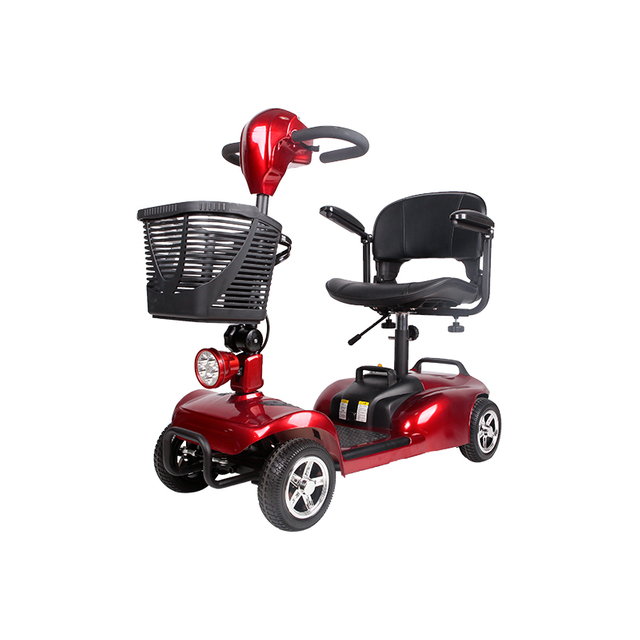
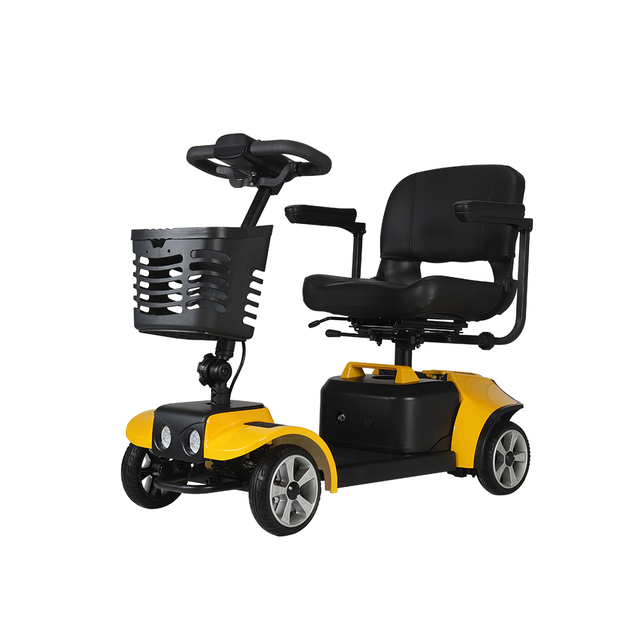
Motorized wheelchairs, like electric wheelchairs, are powered by rechargeable batteries. However, motorized wheelchairs tend to be more compact and simpler in design, which can sometimes result in a shorter range. On average, motorized wheelchairs offer a range of 8–15 miles, depending on the model and conditions. They are often better suited for indoor use or light outdoor travel.
Motorized wheelchairs typically offer a smaller range than heavy-duty electric wheelchairs. However, they are still an excellent choice for individuals who need basic mobility assistance and do not require long-distance travel. They are ideal for everyday indoor use, such as navigating around the home or local stores.
Most electric wheelchairs come with an indicator that shows the battery’s charge level. When the battery is low, the wheelchair may slow down, and the indicator light will change color or blink. It’s important to keep an eye on the battery level to avoid running out of power unexpectedly.
For long journeys, ensure that you have a fully charged battery before leaving. Carrying a spare battery is a practical solution for longer trips, especially when access to charging stations may be limited. Some electric wheelchairs also have removable batteries, making it easier to switch them out when needed.
The range of an electric wheelchair is essential for users relying on them for daily mobility. Factors like battery capacity, user weight, and terrain impact distance. Understanding these helps users choose the right wheelchair. Proper care, maintenance, and planning extend range and ensure performance. Zhejiang Nysin Vehicle Co., Ltd. offers motorized wheelchairs that provide independence and convenience, helping users enjoy greater freedom with reliable performance.
A: The range of an electric wheelchair typically varies between 10 to 25 miles on a full charge, depending on factors like battery type, user weight, and terrain.
A: A motorized wheelchair generally offers a shorter range than power wheelchairs, with most motorized wheelchairs reaching 10 to 15 miles per charge.
A: Yes, maintaining your battery, driving at moderate speeds, and planning routes on flat surfaces can help extend your wheelchair's range.
A: Yes, heavier users can expect a reduced range as the motor has to work harder to move the wheelchair.
A: Most electric wheelchairs, including motorized wheelchairs, have a battery indicator that signals when it's time to recharge.