Views: 998 Author: Site Editor Publish Time: 2025-09-01 Origin: Site
Wheelchair tennis began in 1976 when Brad Parks and Jeff Minnenbraker created a new sport for athletes with impairments. Wheelchair tennis revolutionized disabled sports, offering athletes fresh opportunities at the Paralympic Games. The sport’s journey to the Paralympics has played a key role in making sports more diverse and inclusive. Research shows that adaptive coaching and equipment have improved experiences for everyone.
| Theme | Description |
|---|---|
| Co-Evolution of Training Methods | Adaptive coaching in wheelchair tennis paralympics 20245 benefits athletes with disabilities and able-bodied athletes, enhancing performance and creativity. |
| Innovative Equipment Design | New adaptive equipment in wheelchair tennis paralympics 20245 helps athletes with disabilities excel and also influences mainstream sports. |
| Holistic Athlete Development | Participating in wheelchair tennis paralympics 20245 boosts athletes’ self-esteem, helps them connect with their community, and promotes inclusivity in sports. |
Wheelchair tennis paralympics 20245 will continue this legacy, inspiring athletes and fans at the Paralympics.
Wheelchair tennis began in 1976. It gave athletes with disabilities a way to compete. They could also show their skills. The sport became part of the Paralympic Games in 1992. This made it more well-known and respected around the world. Coaches use new methods and special equipment now. These help athletes play better and enjoy the sport more. The quad division lets athletes with three or more disabled limbs play. This helps make the sport open to more people. New technology and support are helping wheelchair tennis grow. It is now easier and more fun for players and fans.
Wheelchair tennis started in 1976. Brad Parks and Jeff Minnenbraker began the sport in the United States. They wanted athletes with disabilities to have a fun and fair game. The sport got popular very fast. It gave athletes a way to compete and show what they could do. Starting wheelchair tennis was a big moment for adaptive sports everywhere.
Wheelchair tennis brings together people with and without disabilities. Players often practice and play matches together. This helps them make friends and learn from each other.
The first years of the sport helped change sports around the world. Many countries saw how adaptive sports could help people. The table below shows how wheelchair tennis helped sports grow:
| Year | Event | Impact |
|---|---|---|
| 1976 | Founding of wheelchair tennis | Gave athletes with disabilities a chance to compete |
| 1988 | Wheelchair tennis included in Paralympics | Made adaptive sports more known and respected |
| 2012 | Participation of diverse countries in Paralympics | Helped sports become more open and welcoming |
In 1988, wheelchair tennis was shown at the Seoul Paralympics. This gave the sport a chance to be seen by many people. Athletes from many countries played in front of big crowds. The event showed how exciting and skilled the players were. Many people watched wheelchair tennis for the first time.
The 1988 event made more people notice the sport.
It helped people learn the rules and what makes the game special.
The event helped wheelchair tennis become an official sport later.
| Year | Event Description | Outcome |
|---|---|---|
| 1988 | Wheelchair tennis featured as a demonstration sport at the Seoul Paralympics. | Helped the sport become official in 1992. |
| 1992 | Wheelchair tennis became a full medal sport at the Barcelona Paralympics. | The sport got official recognition. |
The 1988 event was a big step for wheelchair tennis. It proved the sport should be part of the world’s biggest games.
Wheelchair tennis became a full medal sport in 1992 at the Barcelona Paralympics. This changed the sport in a big way. Athletes could now win medals and make their countries proud. The sport got more attention and respect after this.
After 1992, more countries and athletes joined the sport. The table below shows how much it grew:
| Year | Participating Countries | Athletes |
|---|---|---|
| 1992 | 84 | 699 |
Making wheelchair tennis official brought many new players.
In 1992, 84 countries sent 699 athletes to play.
This growth showed the sport was becoming more important in the Paralympics.
The story of wheelchair tennis shows how one idea can help many people. Adding wheelchair tennis to the Paralympics inspired athletes and fans everywhere. The sport keeps growing and bringing people together.
Wheelchair tennis paralympics 20245 has many divisions and events. The sport started as a demonstration in 1988. It became a medal event in 1992. Athletes play in four main events: men’s singles, men’s doubles, women’s singles, and women’s doubles. The quad division was added in 2004. This brought quad singles and quad doubles. Each division has its own rules and ways to compete.
The quad division lets athletes with disabilities in three or more limbs play. This change allows more athletes to join wheelchair tennis paralympics 20245.
The table below shows how open and quad divisions are different:
| Division | Eligibility Criteria | Competition Structure |
|---|---|---|
| Open Division | Permanent physical disability with substantial loss of function in one or both lower limbs. | Separate men’s and women’s singles and doubles draws. |
| Quad Division | Permanent physical disability affecting at least three extremities (both upper and lower limbs). | Combined quad singles and doubles draws. |
The sport now has these events:
Men’s singles
Men’s doubles
Women’s singles
Women’s doubles
Quad singles
Quad doubles
Wheelchair tennis paralympics 20245 keeps offering these events. Athletes have many ways to compete.
Wheelchair tennis has grown quickly since joining the paralympic games. In 1992, only 48 athletes played. The Netherlands won the most medals that year. By 2016, athletes from over 100 countries joined wheelchair tennis paralympics 20245. This shows the sport is popular around the world.
There are now over 150 wheelchair tennis tournaments worldwide.
Prize money for wheelchair tennis is more than USD 3 million.
Players have longer rallies and hit more strokes each point. This means the sport is more physically demanding.
Wheelchair tennis paralympics 20245 helps athletes get noticed and respected. Being part of the paralympics makes the sport more visible. More countries send athletes, and fans watch tournaments everywhere.
Wheelchair tennis paralympics 20245 inspires athletes and fans. The sport’s growth shows how important inclusion is and how adaptive sports can help.
Wheelchair tennis keeps changing. Athletes train harder, and equipment gets better. The sport’s place in the paralympic games brings new players. Wheelchair tennis paralympics 20245 is a sign of progress and new chances.
Wheelchair tennis at the paralympics uses almost the same rules as regular tennis. The International Tennis Federation makes these rules. Players move around the court in special wheelchairs. The court is the same size as in regular tennis. The biggest difference is in ball bounces. Players can let the ball bounce two times before hitting it. The second bounce can go outside the court lines. This rule lets athletes play longer rallies and get to more balls.
| Aspect | Wheelchair Tennis | Able-bodied Tennis |
|---|---|---|
| Court Size | Same as able-bodied tennis | Same as wheelchair tennis |
| Equipment | Specially designed wheelchairs | Standard tennis equipment |
| Ball Bounces | Allowed two bounces, second can be outside | Only one bounce allowed |
Wheelchair tennis uses almost all the same rules as regular tennis.
Players can let the ball bounce twice before hitting it.
These rules make the sport fair and fun for athletes at the paralympics.
Athlete classification in wheelchair tennis at the paralympics helps make competition fair. The system puts athletes into groups based on their physical abilities. Competitors must have a permanent disability that affects how they move. There are two main classes: Open and Quad. The Open class is for athletes with problems in their lower limbs but normal upper limb function. The Quad class is for athletes with problems in both their upper and lower limbs.
| Criteria Type | Description |
|---|---|
| Eligibility | Competitors must have a permanent disability that affects movement. |
| Class Definitions | Open: Lower limb problems with normal upper limbs; Quad: Problems in both upper and lower limbs. |
The classification system makes sure athletes play against others with similar abilities. This helps keep matches fair and lets everyone focus on skill and strategy. The system lowers the effect of different disabilities on who wins. Athletes at the paralympics get equal chances because of this structure.
Athlete classification in wheelchair tennis keeps things fair and helps athletes do their best.
Many athletes have made history in wheelchair tennis at the paralympics. Some champions set records that inspire younger players. The table below lists three top players and their achievements:
| Athlete | Paralympic Medals | Major Titles Won | Career Singles Record | Career Doubles Record |
|---|---|---|---|---|
| David Hall | 6 | 9 Australian Opens, 8 US Opens, 7 British Opens, 8 Japan Opens | 632-111 | 397-89 |
| Shingo Kunieda | 6 | 20 Grand Slam Titles | 22-2 at Paralympics | N/A |
| Esther Vergeer | 7 | 48 Grand Slam Titles | N/A | N/A |
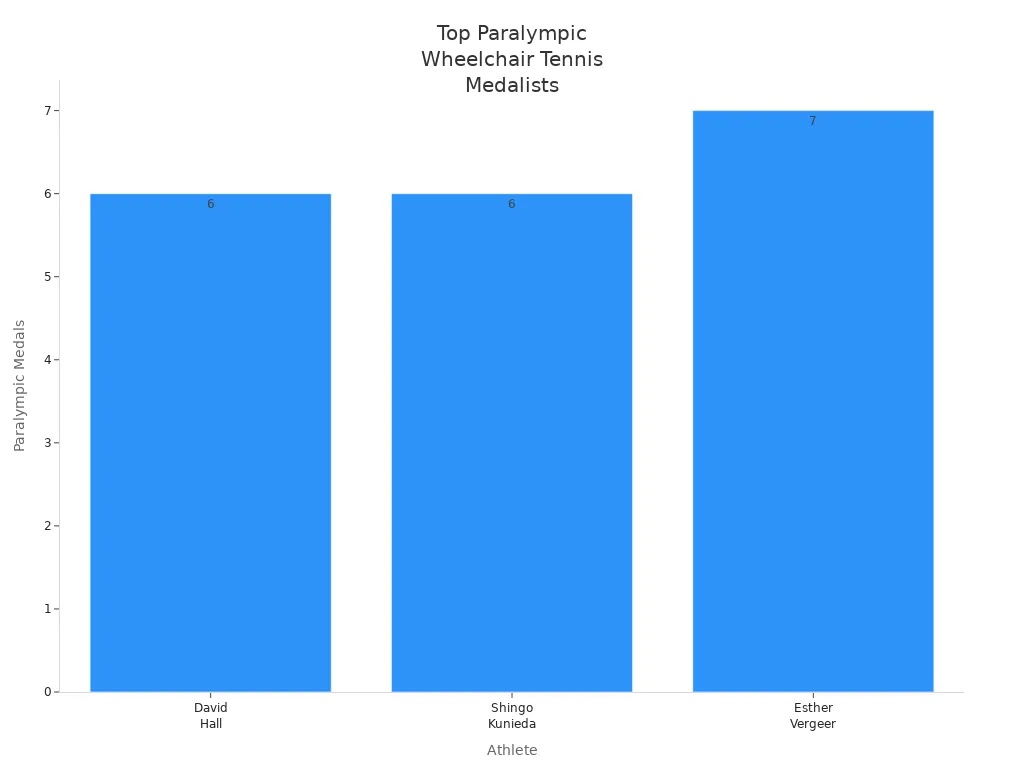
Esther Vergeer is a seven-time paralympic champion. She won gold medals in singles in 2000, 2004, 2008, and 2012. She also won gold in doubles in 2000, 2004, and 2012. Vergeer has 48 Grand Slam titles. She was ITF World Champion for 13 years straight.
Shingo Kunieda is the top men’s wheelchair tennis player. He has seven world titles and 20 Grand Slam singles titles. Kunieda won medals at five paralympic games in a row. He started with doubles gold in Athens 2004. He finished with singles gold in Tokyo 2020. His singles record at the paralympics is 30 wins and 2 losses.
National programs help athletes do well in wheelchair tennis. The United States Tennis Association (USTA) supports players and communities. USTA grants give people with disabilities a chance to play tennis. These programs help athletes grow and succeed at the paralympics.
USTA spends over $100,000 each year on wheelchair tennis programs. This money helps athletes get better coaching and more chances to compete. Players can earn national rankings and join more tournaments. These efforts help the country win more wheelchair tennis medals.
National support helps athletes improve and compete at the top level. Programs like USTA make the paralympics more open and competitive.
Wheelchair tennis is growing because of new technology. Many organizations help adaptive sports get better. They give athletes more money and build new places to play. Special wheelchairs now turn easier and feel more comfortable. These changes help athletes move faster and play longer games. Custom wheelchairs and prostheses fit each player’s needs. This helps athletes play better and reach new goals.
More people know about adaptive sports, so wheelchair tennis is getting bigger.
Governments and charities give more money and build better places for athletes.
Media shows wheelchair tennis during the paralympics, so more people watch.
New wheelchair designs make games more fun for players and fans.
Big changes in technology and support have made wheelchair tennis better. These improvements help athletes play at their best.
Wheelchair tennis has many chances to grow, but there are still some problems. More people see the sport at the paralympics, so there are more sponsors and fans. People now understand why inclusion in sports matters. Some athletes still have trouble joining the sport. It can be hard to find places to train and get enough money. Some people still think wrong things about disability, which can stop athletes from playing.
International sports groups try to help wheelchair tennis grow. They make new programs and events for athletes. The table below shows two new projects:
| Initiative | Description |
|---|---|
| USOPC/NCAA Para-College Inclusion Project | Held a wheelchair tennis match at the 2023 NCAA Championships to teach people and make competition better. |
| Intercollegiate Tennis Association (ITA) | Made a new group for wheelchair tennis coaches in colleges to give more help and better rules. |
Wheelchair tennis will keep growing as more people join and support it. The paralympics will stay important for athletes to show their skills and inspire others.
Wheelchair tennis has had many big moments since Brad Parks started it in 1976.
In 1976, Brad Parks started wheelchair tennis.
In 1988, the sport was shown at the Seoul Paralympics.
In 1992, it became a full event at the Barcelona Paralympics.
In 2000, the Sydney Paralympics made it more popular.
In 2004, the quad category was added.
Wheelchair tennis gives athletes more chances and helps make strong groups. Working with the International Tennis Federation brings more help and worldwide events. Experts say coaching for everyone and programs, like those by Helen Abbott, help keep wheelchair tennis open to all. The future is bright for players and fans.
Wheelchair tennis lets the ball bounce two times. The second bounce can go outside the court lines. Players use wheelchairs made just for the sport. Most rules are the same as regular tennis. These changes help athletes play fairly.
Athletes with disabilities in three or more limbs can join. This group includes people with limited movement in arms and legs. The quad division lets more athletes play and compete.
The quad division helps make wheelchair tennis more open and welcoming.
Athletes need a permanent disability that affects how they move. They earn spots by playing in tournaments around the world. Athletes must get enough points from the International Tennis Federation.
| Requirement | Details |
|---|---|
| Disability Type | Permanent, affects movement |
| Ranking | ITF points |
| Tournament Results | International competitions |
Players use light wheelchairs with slanted wheels for fast turns. Racquets and balls are the same as in regular tennis. Wheelchair design helps athletes move quickly and play longer rallies.
Custom wheelchairs
Standard tennis racquets
Regular tennis balls
Special gloves for grip

 English