Views: 88 Author: Site Editor Publish Time: 2026-05-13 Origin: Site


If you’ve ever seen a wheelchair fold, you must have been awed. The process almost feels like magic. With a simple movement, the chair moves forward, turns effortlessly, and stops when needed. But when it’s time to store it, it folds down neatly in seconds. This has raised the question: how does a folding electric wheelchair work?
This question will be answered in detail in this article. So, keep reading.
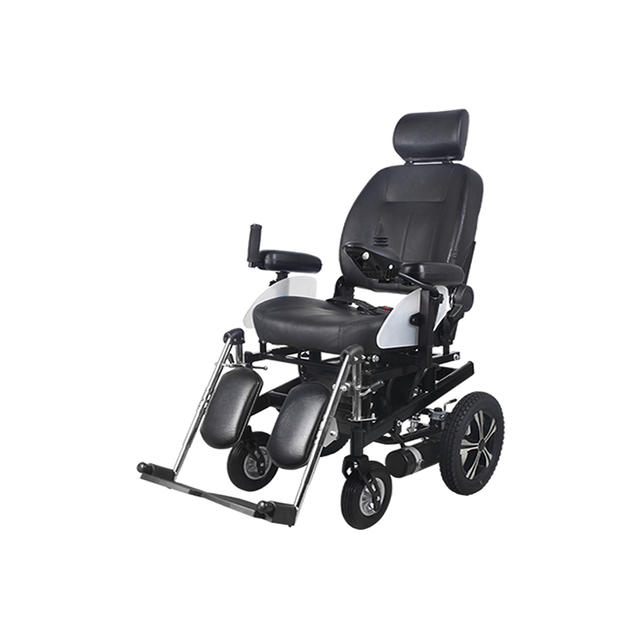
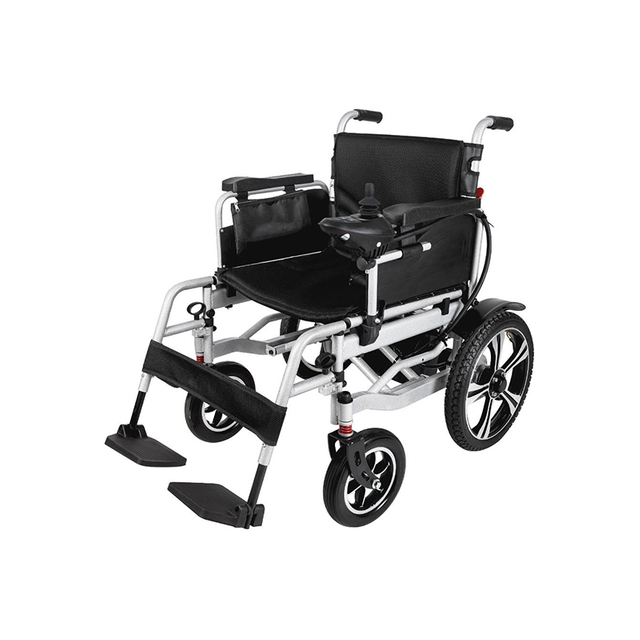
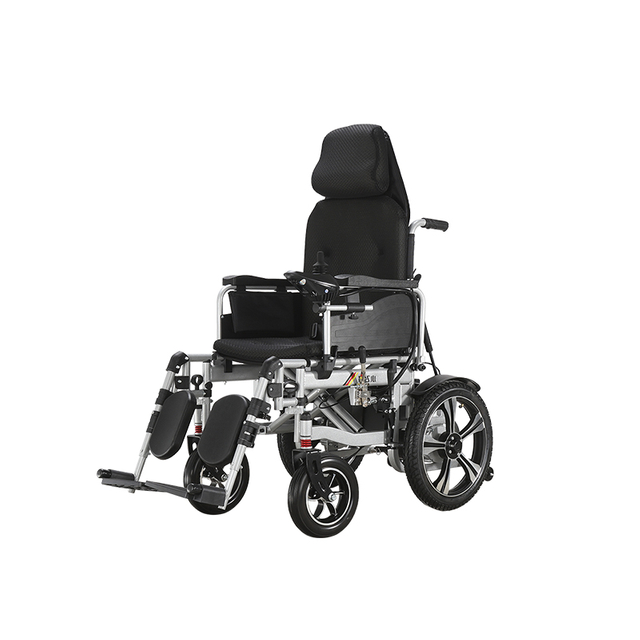
A folding electric wheelchair is a powered mobility aid that provides easy movement while being easy to transport and store. They are designed with lightweight frames and a folding mechanism that makes them easy to fold into a compact size when you want them to. They are popular among those who travel a lot.
Electric motor system
You can basically call the motor system the ‘muscle’ of the folding electric wheelchair. Without it, you’ll just have a manual wheelchair that needs to be pushed. Most models even use dual motors, that is, one attached to the two wheels at the back. Each motor operates on its own and allows the chair to run smoothly without jerks or bumps.
Battery pack
If the motor is the 'muscle,' the battery is the ‘fuel tank.' It is what powers everything the chair needs to move. Many models use lithium-ion batteries, which are lighter, charge faster, and are more durable. Charge it fully, and you can move for up to 25 miles. However, this depends on your weight, the landscape, and how often you use it.
Many batteries of foldable electric wheelchairs are also detachable. So, even when you fold them, you can charge the batteries separately.
Controller and joystick
A foldable electric wheelchair has a controller and a joystick, which you can call the ‘brain and hands.' This is the component your hands touch the most. The joystick is placed on the armrests and can be operated with one hand. You use it to direct where you want the chair to go. The controller is like a computer’s processing unit that determines how much power you send to each motor.
Frame and folding mechanism
You can call the frame the ‘backbone’ of the wheelchair. This is what holds everything together. Most frames are made of aluminum alloy; thus, they are strong enough to support your body weight but light enough to carry about. Some have an automatic folding system, where you just press a button, and everything collapses.
Wheels and suspension
The wheels are what determine how comfortable and stable you’ll feel in your ride. A folding electric wheelchair has large wheels at the back and small wheels at the front. It also has solid tires, which have low maintenance. But some use air-filled tires for a softer ride. It also has a suspension system that absorbs shock when you hit a rough path.
Power activation
A folding electric wheelchair starts with pressing a button to turn it on. Once you press the button, it doesn’t start up immediately. Think of it like your phone booting up. Gradually, its components - the controller, motors, and battery - come together to make sure everything is working well before you start moving.
Typically, you should see a small light show on the joystick panel. That is to check if your chair is fully powered on. This power activation happens within seconds.
User input
After your wheelchair is fully powered on, it won’t just move. You need to feed it information so it can take you where you want to go. The good thing is you don’t need special knowledge to use it. When you gently push the joystick forward, it goes forward. Pull it back, and it reverses. Move it to the side, and the chair turns in that direction. All of these happen gradually, so you can have a comfortable ride.
Signal processing
The joystick doesn’t actually move the wheels. What it does is to send signals to the controller. In other words, it does the ‘thinking’. The controller processes your input, including how fast you want to go, which direction you’re heading, and how much power each motor needs to move. Even if you push the joystick fully forward, the controller keeps the chair balanced so you don’t get hurt.
Motor activation
After the signal is sent to the controller, the motor activates. It kicks in and starts turning the wheels at the back. It interprets the input you feed the joystick. The interesting part is that each motor works on its own. Your chair can turn and navigate smoothly without complex steering systems. For example, if you’re turning left, the right motor spins faster while the left motor becomes slow. The motors can even spin in opposite directions if you want.
Braking and safety features
Have you ever wondered how the wheelchair stops? Well, the braking mechanism is simple. The moment you release the joystick, the wheelchair slows down and gradually stops. You don’t need to press any button. When there’s no input fed to the controller, the chair cuts power to the motors and activates the brakes at the same time. So, even if you’re on a slope, the chair doesn’t roll or drift.
Front pressing folding mode
The front pressing folding mode involves pressing the front part of the wheelchair frame, usually near the seat or footrest area, so that the folding action can take place. When you press down, the frame begins to collapse inward in a natural, easy way, without much struggle. This mode can be done in seconds without using specialized tools or strength.
The Cushion-in-the-Middle Pull-Type Folding Mode
This folding method is very simple. You grab the seat cushion in the middle and pull it upward. As you do this, the whole frame folds inward, and you can store it away. You don’t need to look for levers or buttons. Once it is folded, you get a compact design that you can fit into tight spaces.
This folding mode is also reliable. You don’t need to worry that components will not work or will be damaged during the process.
Split folding
Split folding is quite tricky, yet interesting. Instead of folding into one single piece, the frame of the folding electric wheelchair is divided into smaller sections. This way, you can fold it into two parts. You can either fold the chair first and separate it, or you can split it directly. If you have limited strength, this folding method will help you fold the chair and put it in place.
Battery range limitations
Battery range is one of the things people worry about when it comes to folding electric wheelchairs. The truth is, while these chairs give comfort and convenience, they do not have the same battery range. Some of them can only go a few miles, so if you’re planning a full day out, they may stress you out.
Weight capacity constraints
Folding electric wheelchairs are ultralight, which is a good thing. However, when it comes to supporting heavy weights, they may not be the best. Most models can handle 100 kg or thereabouts, which is fine for many individuals. However, for those who weigh more, this becomes a problem. Even if it can support your weight, using its full weight capacity might not give you a smooth and stable ride.
Terrain limitations
Folding electric wheelchairs are great for smooth, even, flat surfaces. But how about rough terrains and uneven surfaces? They have limits there. They do not have the wheels or power that other wheelchairs have. Once you start riding on rough terrain, the gravel paths, muddy ground, or uneven outdoor area will make you regret using it.
Maintenance requirements
It’s true that folding electric wheelchairs have low maintenance, but there are still a few things that call for frequent attention.
Battery: Since the batteries are small, you’ll need to charge them properly and not letting it drain too often. You may also need to replace them after a few years.
Moving parts: Folding electric wheelchairs have lots of moving parts that experience wear over time. Even the tires that may appear solid may need frequent checks so they do not wear down.
Proper startup and shutdown procedures
When starting your wheelchair up, make sure it is on level ground. The joystick should be in a neutral position; the chair will just get confused. Press the power button and be patient for a few seconds while it fully comes up.
If you want to shut it down, bring the chair to a complete stop, ensuring it is not moving at all. Release the joystick and let it power down. Ensure it is turned off completely before you get off.
Navigating slopes and uneven terrain
Folding electric wheelchairs cannot handle slopes or uneven ground. So, if you find yourself riding on any of these, be cautious. When you go up a slope, try to move straight so that the chair will be balanced. Do not move the joystick suddenly; it will make you uncomfortable.
When going downhill, use gentle joystick adjustments to keep things in control. For uneven terrain, ride slowly. Making sudden movements can cause issues for you.
Battery charging best practices
Taking care of the battery is more than just charging it till it gets full and using it till its last breath. Here are a few practices to adopt:
Charge the battery regularly and do not let it drain completely. Draining its power out all the time will shorten its lifespan.
Use the correct charger that comes with the wheelchair; it may lead to overheating or damage.
When you charge the wheelchair, place it in a dry, well-ventilated area. Avoid harsh temperatures.
If you follow these practices, you can use your wheelchair to the full.
Regular inspection and maintenance
Folding electric wheelchairs need frequent inspection to keep them functioning well. Check the frame, joints, and the folding mechanisms. Check the wheels and tires for wear or flattening signs. If your chair uses air-filled tires, are they properly inflated?
Don’t neglect the joystick and controls. Make sure they respond properly. Address anything that feels off.
Daily indoor mobility
Folding electric wheelchairs are mostly used indoors. If you want to make small, routine movements, like going to your bedroom, your kitchen, or around the living room, these chairs can do the job without making it stressful. Its compact, lightweight size and easy maneuverability make it easy to navigate. You don’t need much assistance; your joystick can be your hand.
Outdoor travel and commuting
When it comes to using the chairs outdoors, they still seem pretty convenient. If you want to visit friends, enjoy some fresh air, or go shopping at the mall, these chairs can take you there and back with ease. You can fold them and tuck them in your car trunk or vehicle. Of course, you’ll want to be mindful about riding them on uneven slopes and rough terrains.
Medical and rehabilitation use
Folding electric wheelchairs are also mainly seen in medical and rehabilitation settings. These places accommodate patients who cannot move freely or even use their hands. With these chairs, they have freedom, mobility, and independence without physical strain. It also improves their posture and balance without stress. It helps patients resume their normal routine and aids in quick recovery.
Airport and tourism scenarios
Folding electric wheelchairs are airline-friendly. At airports, you move a lot and wait in lines. You need a chair that will make you comfortable for the waiting period. You can fold these chairs, and within seconds, they’ll collapse so you can toss them into the cabin. You can use them in museums and hotels too, where you need to move around freely.
Folding electric chairs have a simple folding mechanism that makes them portable. They are ideal for those who travel a lot or who love the breath of fresh air. If you’re looking for wheelchairs that suit your style, our experts at Sinovehicles are ready to help. Contact us today.
Yes, folding electric wheelchairs are air-friendly. Not only do they meet the safety regulations, but their compact size allows them to fit into airline cabins for a safe, smooth travel.
Folding electric wheelchairs can support weights between 220 lbs and 450lbs. However, heavy-duty electric chairs can support more.
Yes, folding electric wheelchairs are easy to transport since they are ultralight and small in size.
While you can use a folding electric wheelchair outdoors, they generally do not perform well on rough terrains because of their components.